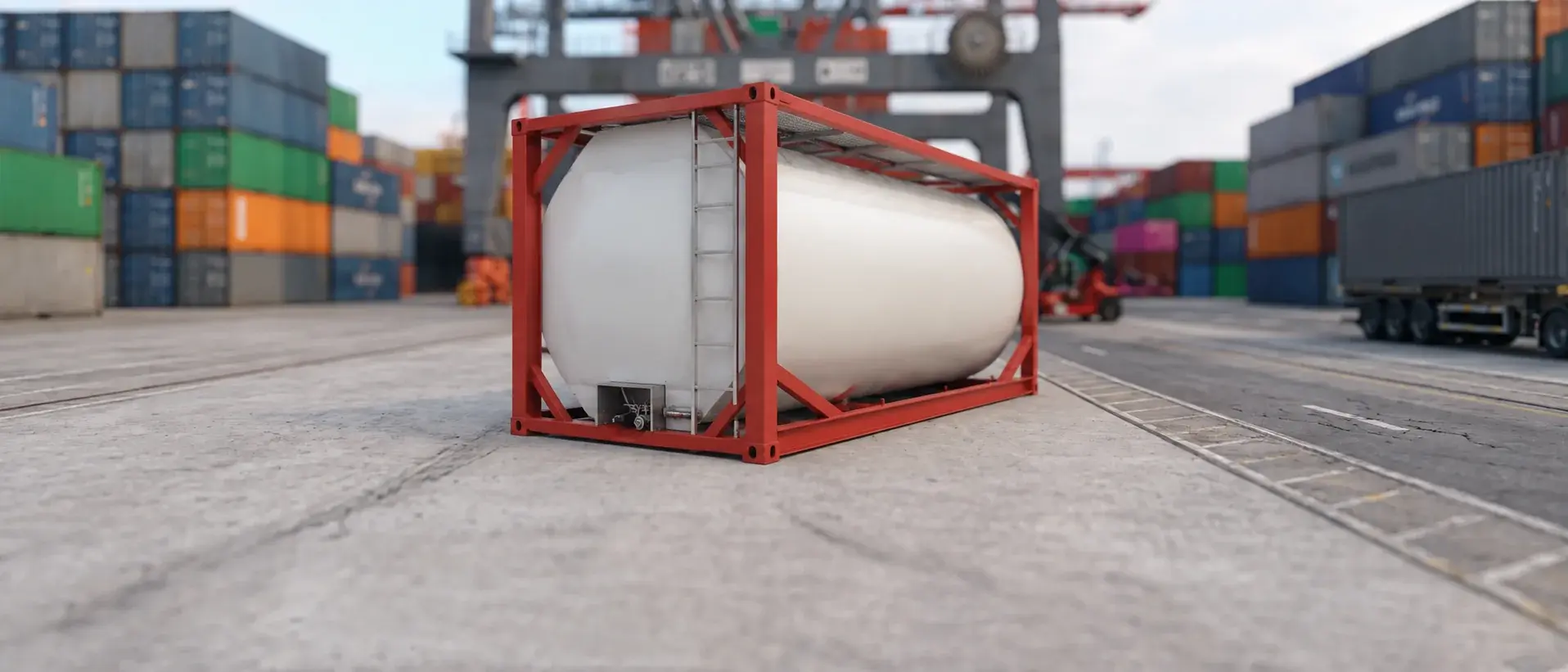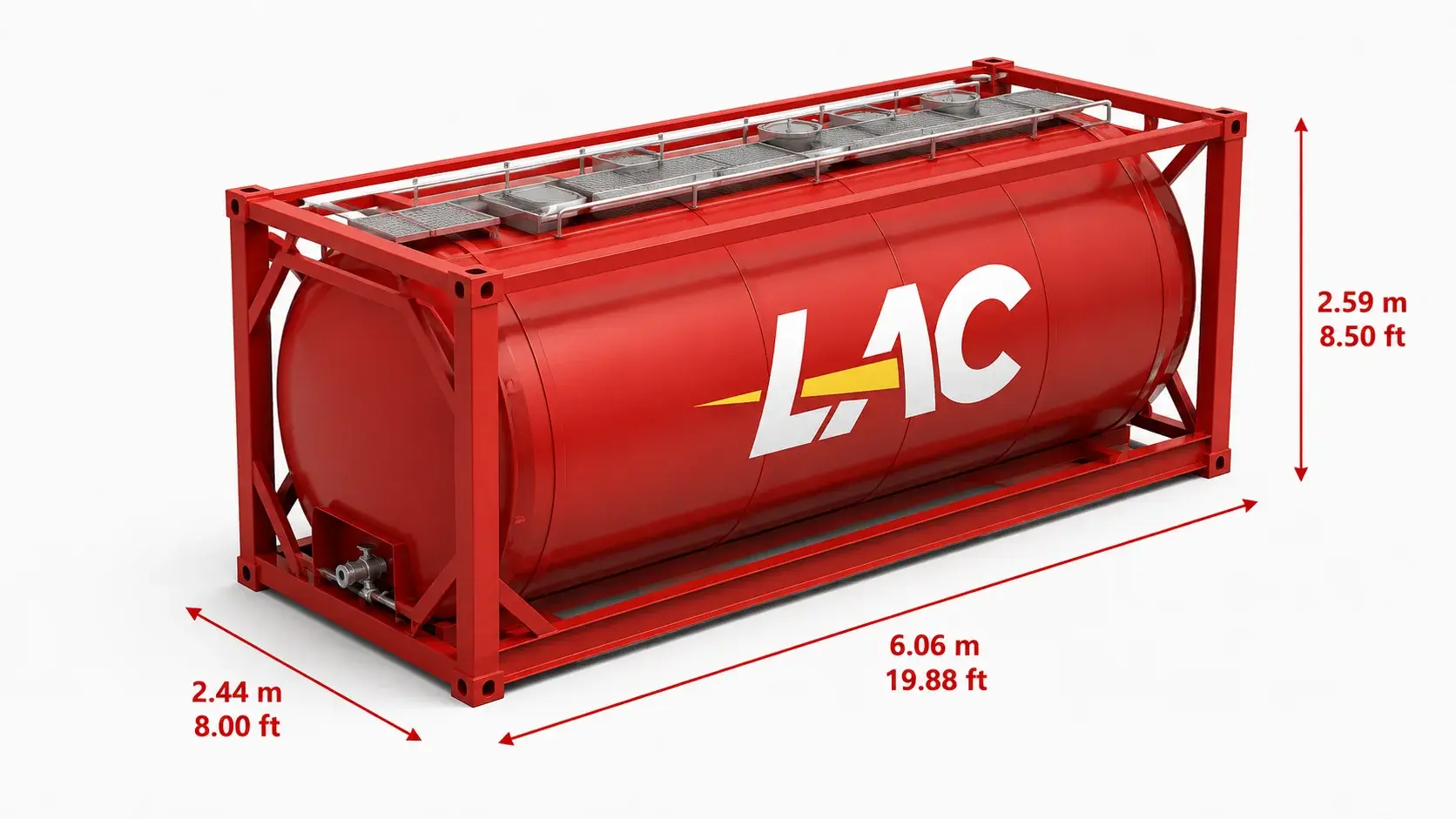

The 20 ft Tank container is designed for transporting liquid cargo (and certain regulated substances depending on the tank specification) using a built-in tank system mounted inside a 20 ft ISO frame. Tank shipments require careful planning around product compatibility, cleaning standards, filling limits, and safety procedures for loading and discharge. Specifications can vary by fleet and tank code, so always confirm the exact unit requirements for the commodity being shipped.
Intended for liquids and tank-suitable commodities (depending on tank type/code)
Requires product compatibility checks and correct cleaning/handling procedures
Loading must respect filling limits and safety procedures (commodity dependent)
Specs may vary by manufacturer / fleet / tank code
20 ft Tank Container Image Gallery
Best for / Not ideal for
Best for
Not ideal for
Bulk liquids (food-grade liquids, chemicals, and other liquids suitable for tank transport)
Cargo requiring standard palletized handling (use dry containers)
Commodities requiring closed, controlled loading/discharge with proper cleaning
Commodities incompatible with available tank materials/linings or cleaning standards
Shippers with access to appropriate filling and discharge infrastructure
Loads where origin/destination cannot support safe tank filling/discharge operations
Industries & typical commodities
Chemicals: liquid chemicals, solvents, additives, and other compatible chemical products subject to tank specifications and regulations.
Food & Beverage: edible oils, juices, syrups, and other food-grade liquids when appropriate cleaning and certification requirements are met.
Industrial liquids: oils, lubricants, intermediates, and other liquid bulk products.
Agriculture: liquid fertilizers and other compatible agricultural liquids, depending on tank type and regulatory requirements.
Specialty liquids: other bulk liquid commodities requiring dedicated tank transport, subject to compatibility and equipment requirements.
Sizes & dimensions – 20ft Tank Container
Dimension
Metric
Imperial
External Length
6.06 m
19.88 ft
External Width
2.44 m
8.00 ft
External Height
2.59 m
8.50 ft
Capacity & weights – 20ft Tank Container
Spec
Metric
Imperial
Volume
24,000 L
6,340.13 gal
Tare Weight
3,500 kg
7,716.18 lbs
Payload Capacity
32,500 kg
71,650.24 lbs
Max Gross Weight
36,000 kg
79,366.41 lbs
Handling recommendations
Confirm tank type/code and product compatibility (materials, linings, fittings) before booking.
Verify cleanliness standards (e.g., food-grade) and required cleaning certificates as applicable.
Respect filling limits and safe handling procedures to prevent overfill and pressure risks (commodity dependent).
Use proper connections and ensure valves/manlids are secured after loading; check for leaks before release.
Plan discharge method and equipment at destination to avoid delays and unsafe operations.
FAQs about 20 ft Tank Containers
What is a 20 ft Tank container used for?
A 20 ft tank container is used to transport bulk liquids (and certain regulated products depending on tank specification) in a closed tank system mounted in a standard ISO frame. It is commonly used for chemicals and food-grade liquids where controlled loading/discharge and proper cleaning are critical. Because tank equipment varies by tank code, fittings, and materials, the right unit must match the product’s compatibility and regulatory requirements for safe transport.
How many pallets fit in a 20 ft Tank container?
Capacity is typically defined by volume and allowable payload. Your referenced unit lists 24,000 L (6,340 gal) volume and a max gross weight of 36,000 kg, with payload dependent on tare weight. Actual safe fill levels depend on the product’s density and any regulations that require leaving expansion space. Always confirm the specific tank’s plate data and apply correct filling limits for the commodity to avoid overweight or unsafe conditions.
Is a 20 ft Tank container waterproof and sealed?
Tank containers are designed as closed systems to prevent leakage during normal transport, but “sealed” performance depends on correct valve/manlid closure, gasket condition, and proper handling. Leakage risk is mainly operational: incorrect connections, damaged seals, or improper tightening can cause issues. Before release, verify valves and manlid are secure, conduct leak checks as required, and ensure protective caps are in place. Requirements can vary by product and tank design.
When should I choose a Tank vs Flexitank vs Standard container?
Choose a tank container when you need a robust ISO solution with controlled loading/discharge and the ability to meet product compatibility and cleaning requirements. Flexitanks are often used for certain non-hazardous liquids in dry containers, but they have different limitations and handling requirements. A standard dry container is suitable for packaged liquids (drums/IBCs) when bulk handling isn’t necessary. The right choice depends on commodity, hazard class, density, and infrastructure at origin/destination.
What cargo is not suitable for a 20 ft Tank container?
A 20 ft tank container is not suitable for palletized general cargo or products that are incompatible with the tank’s materials, linings, or fittings. It may also be unsuitable if origin/destination cannot support safe filling and discharge operations. For regulated products, suitability depends on the tank code and compliance requirements, including documentation and cleaning standards. Always match the product to the correct tank specification and verify approvals before shipment.
Don't Just Take Our Word for It
Learn from the experiences of those who matter most: our customers
This website uses cookies to improve your experience. We'll assume you're ok with this, but you can opt-out if you wish. Read our cookies policyACCEPT
Cookies Policy
Privacy Overview
This website uses cookies to improve your experience while you navigate through the website. Out of these cookies, the cookies that are categorized as necessary are stored on your browser as they are essential for the working of basic functionalities of the website. We also use third-party cookies that help us analyze and understand how you use this website. These cookies will be stored in your browser only with your consent. You also have the option to opt-out of these cookies. But opting out of some of these cookies may have an effect on your browsing experience.
Necessary cookies are absolutely essential for the website to function properly. This category only includes cookies that ensures basic functionalities and security features of the website. These cookies do not store any personal information.
Any cookies that may not be particularly necessary for the website to function and is used specifically to collect user personal data via analytics, ads, other embedded contents are termed as non-necessary cookies. It is mandatory to procure user consent prior to running these cookies on your website.