

 Request a Quote
Start shipping now
Request a Quote 
Start shipping now
Request a Quote
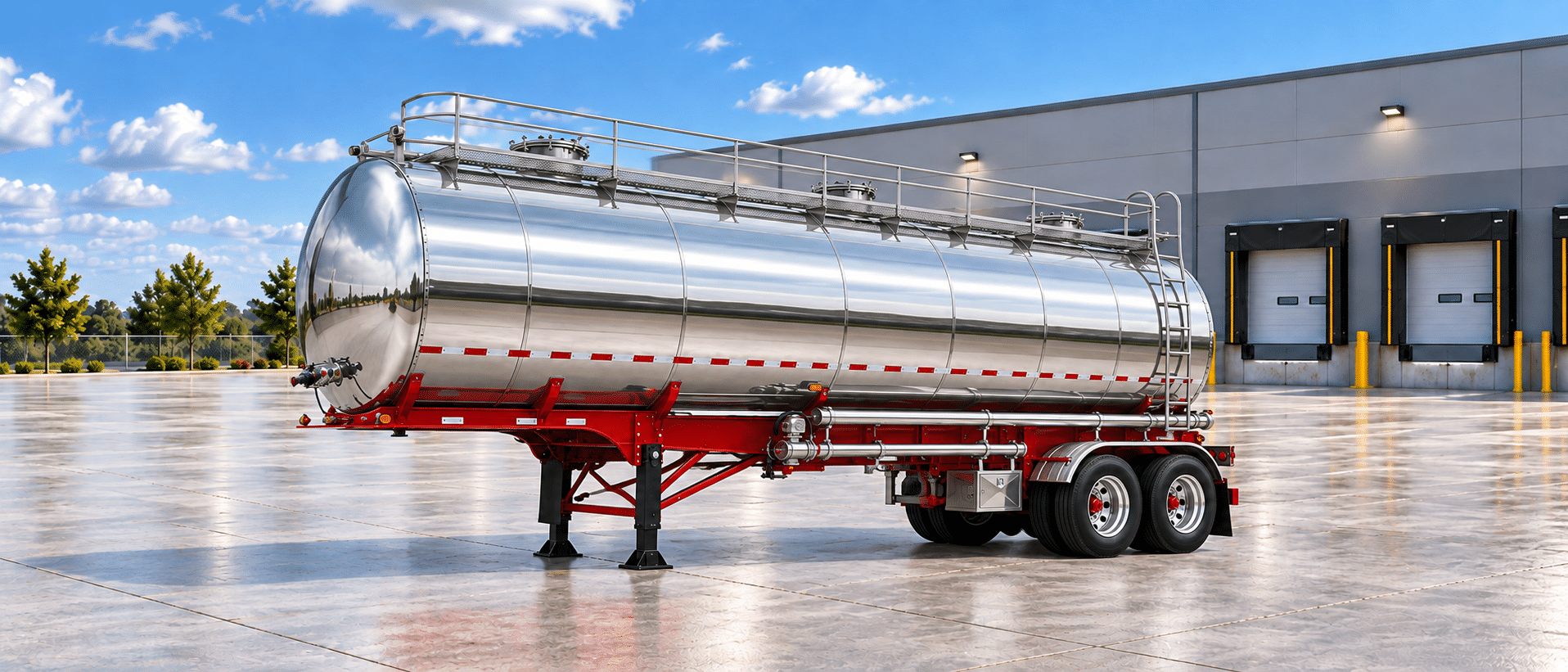
Liquid Bulk Tanker trailers are specialized trailers designed to transport liquids in bulk rather than in individual drums, totes, or other packaged units.
The cargo is carried directly inside a sealed tank mounted to the trailer chassis. Tank construction, material, capacity, insulation, compartment configuration, and discharge equipment vary according to the specific liquid being transported.
Because different liquids have different density, sanitation, temperature, and compatibility requirements, the exact tanker configuration should always be selected based on the commodity.
Food-grade tanker manufacturers commonly use stainless steel construction, while capacity and equipment vary according to the product and application.
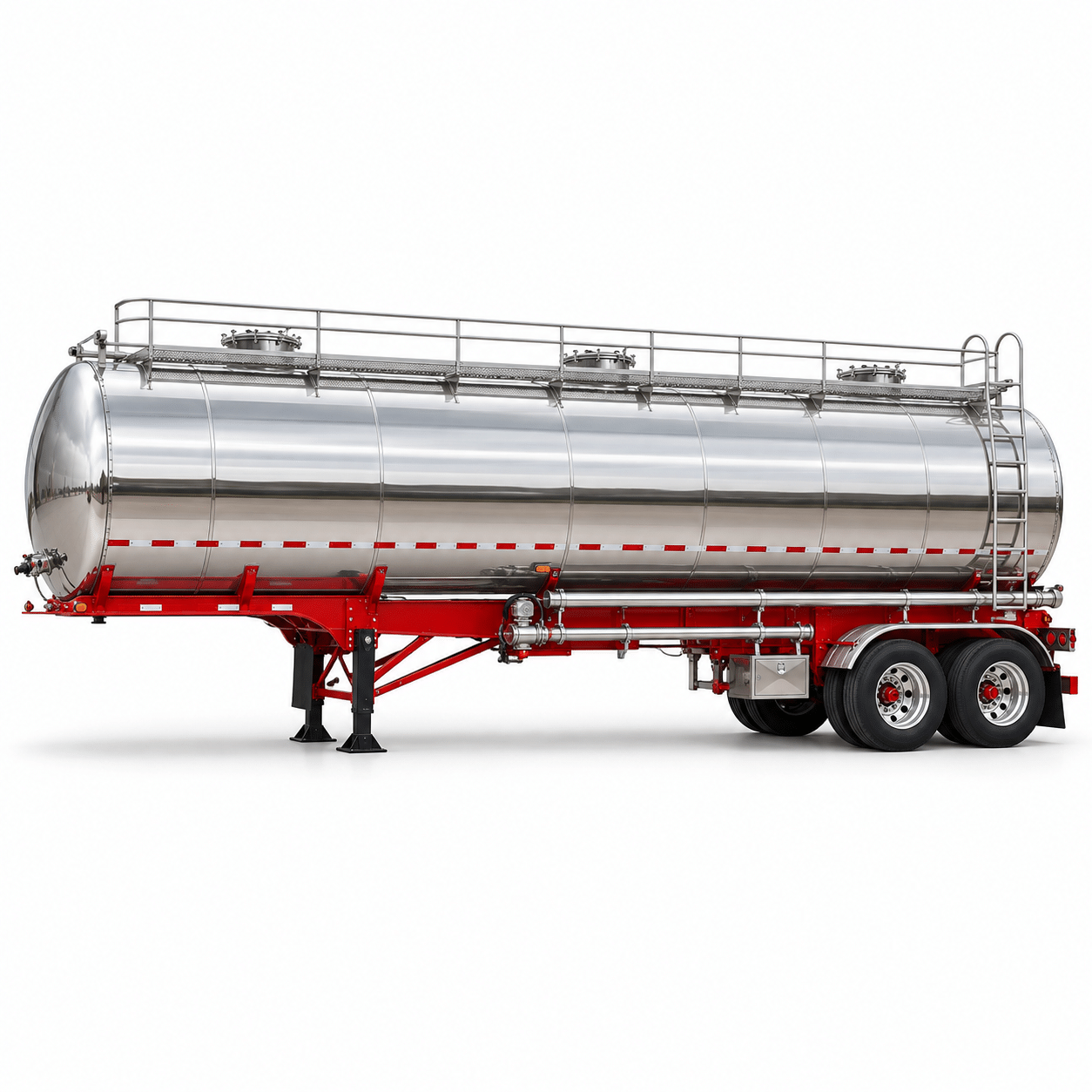
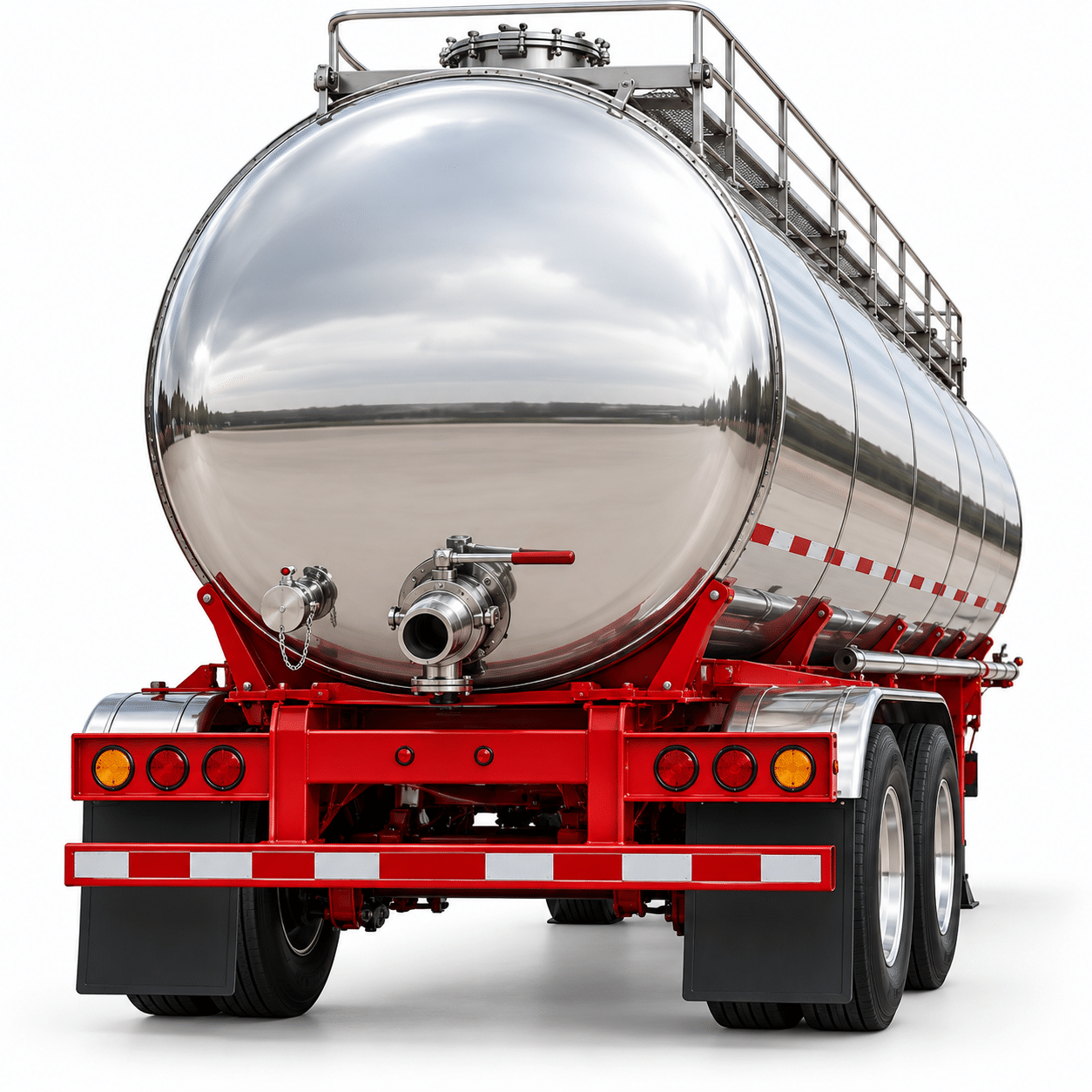
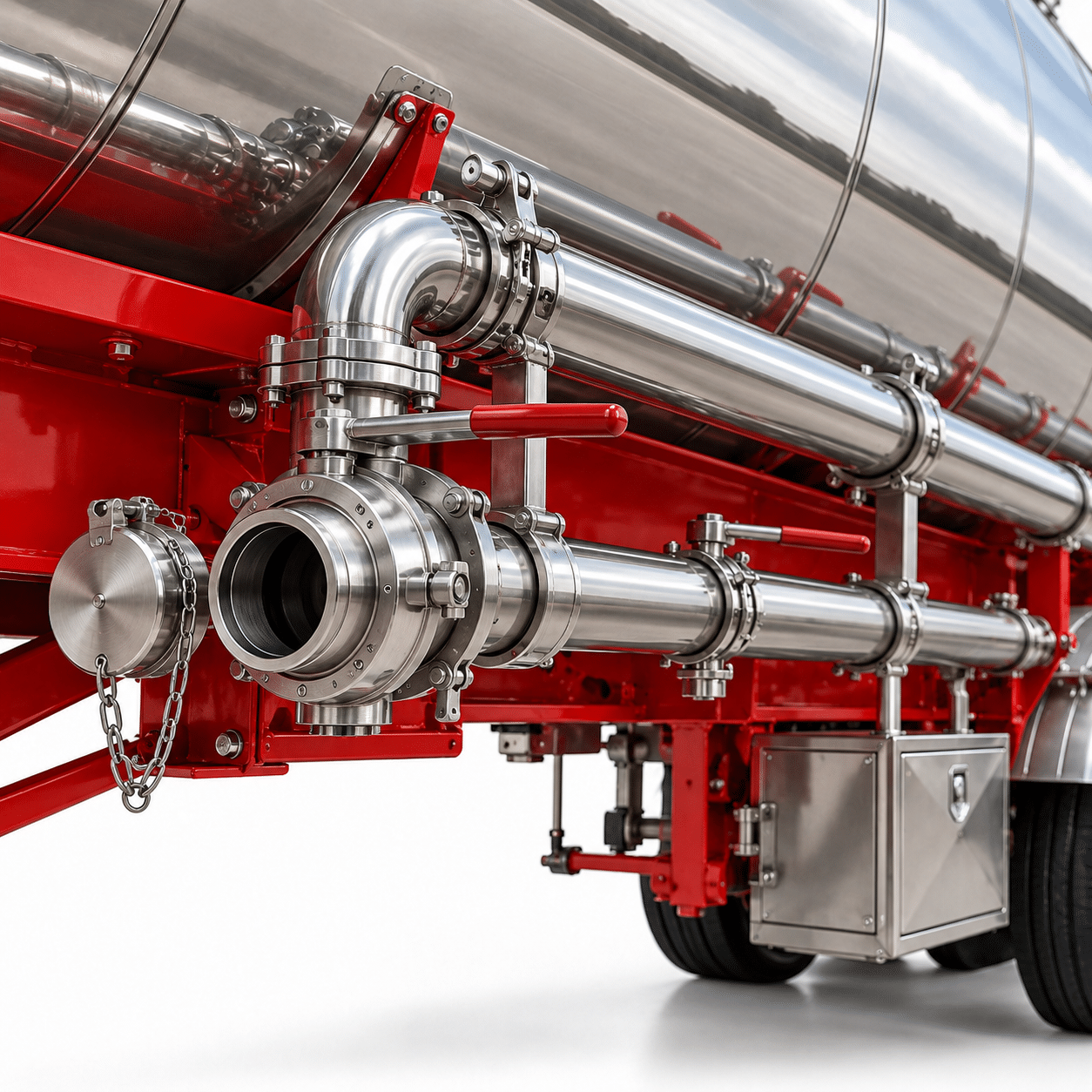
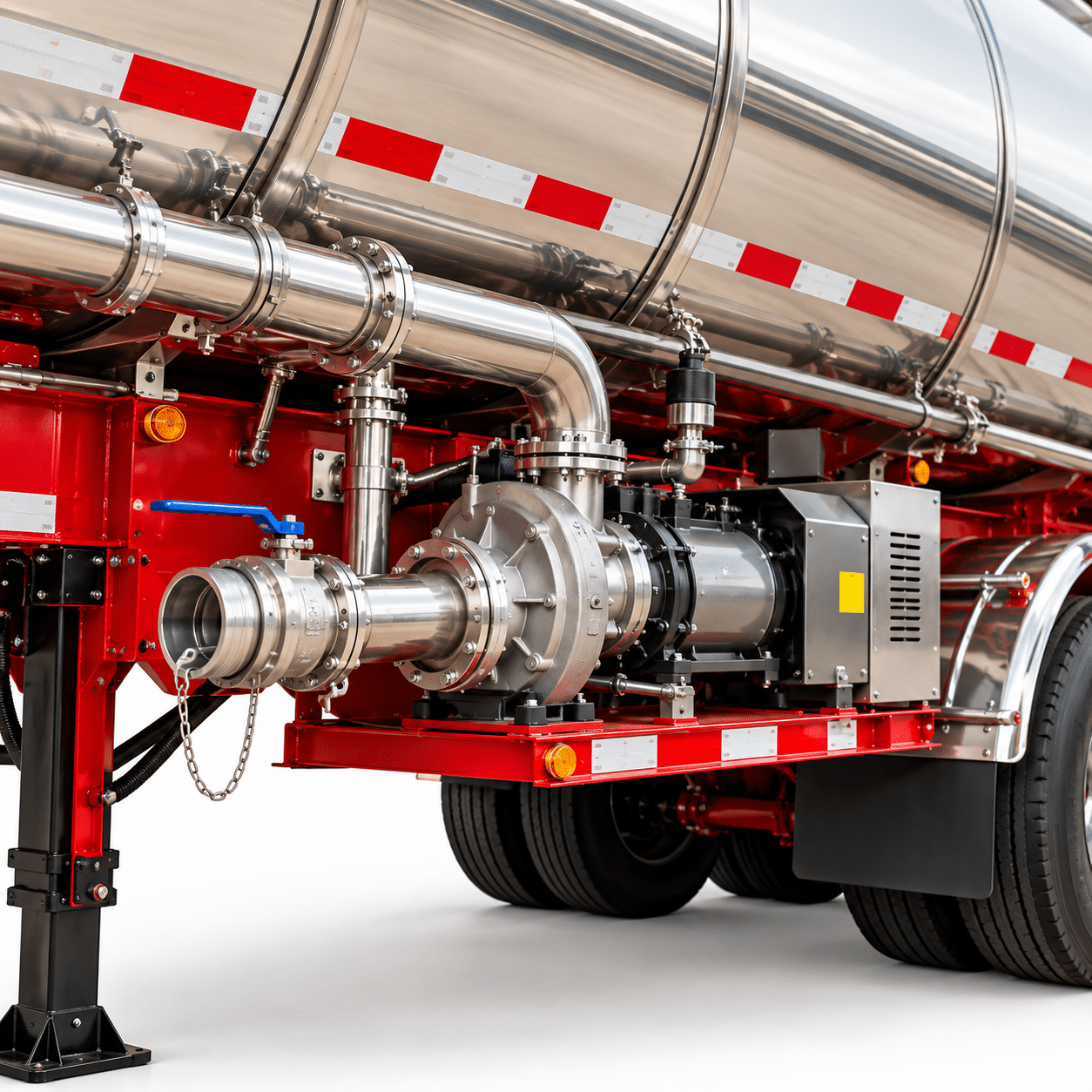
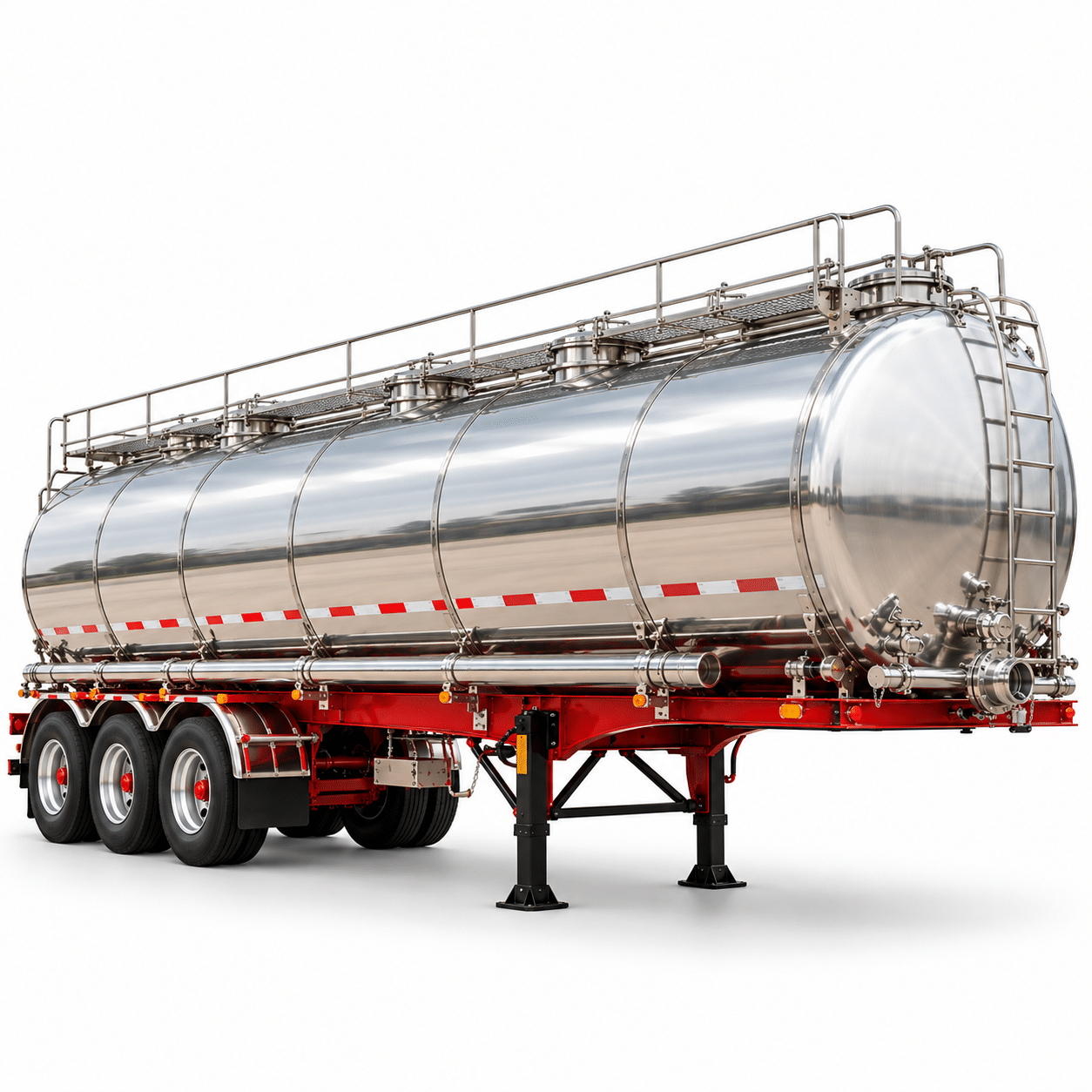
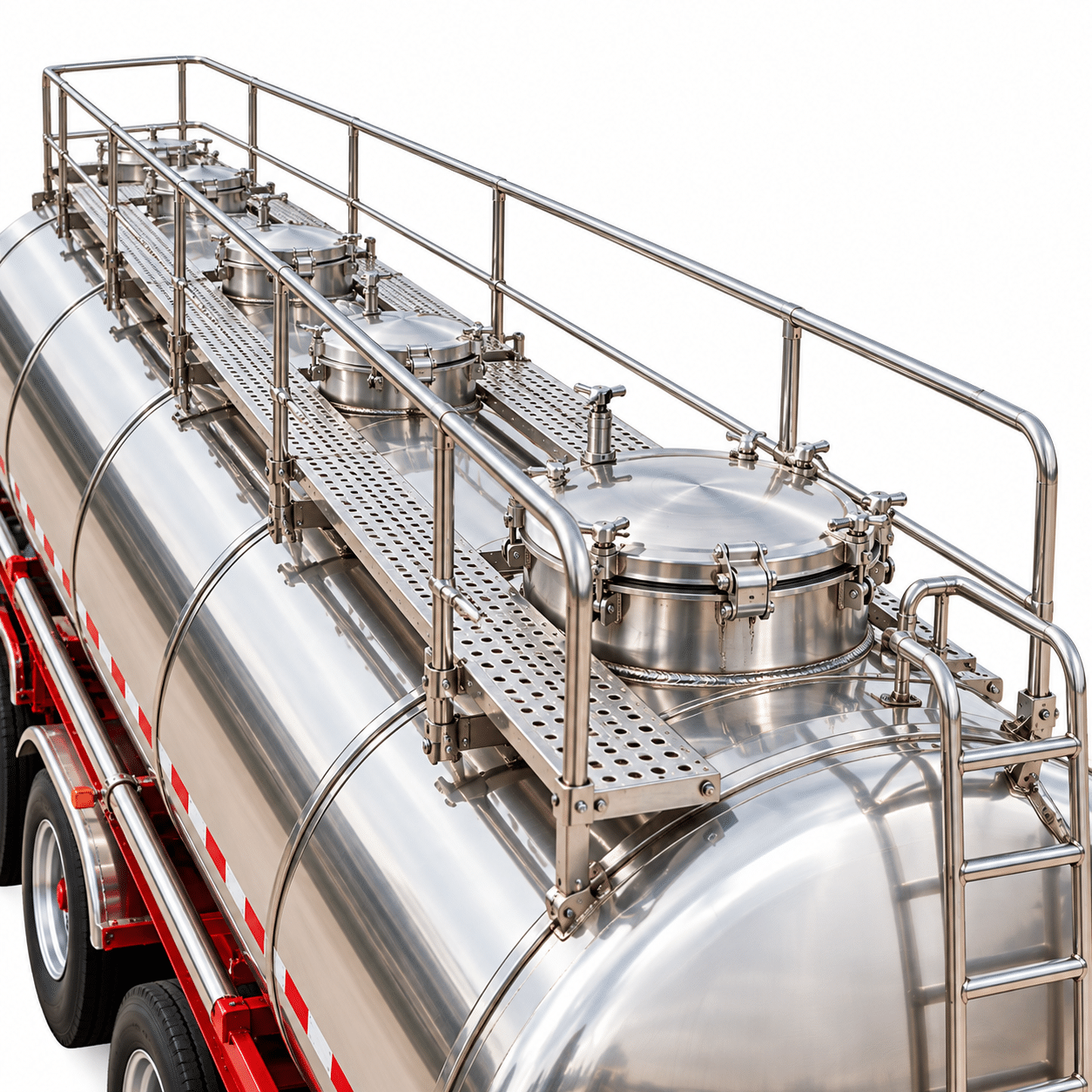
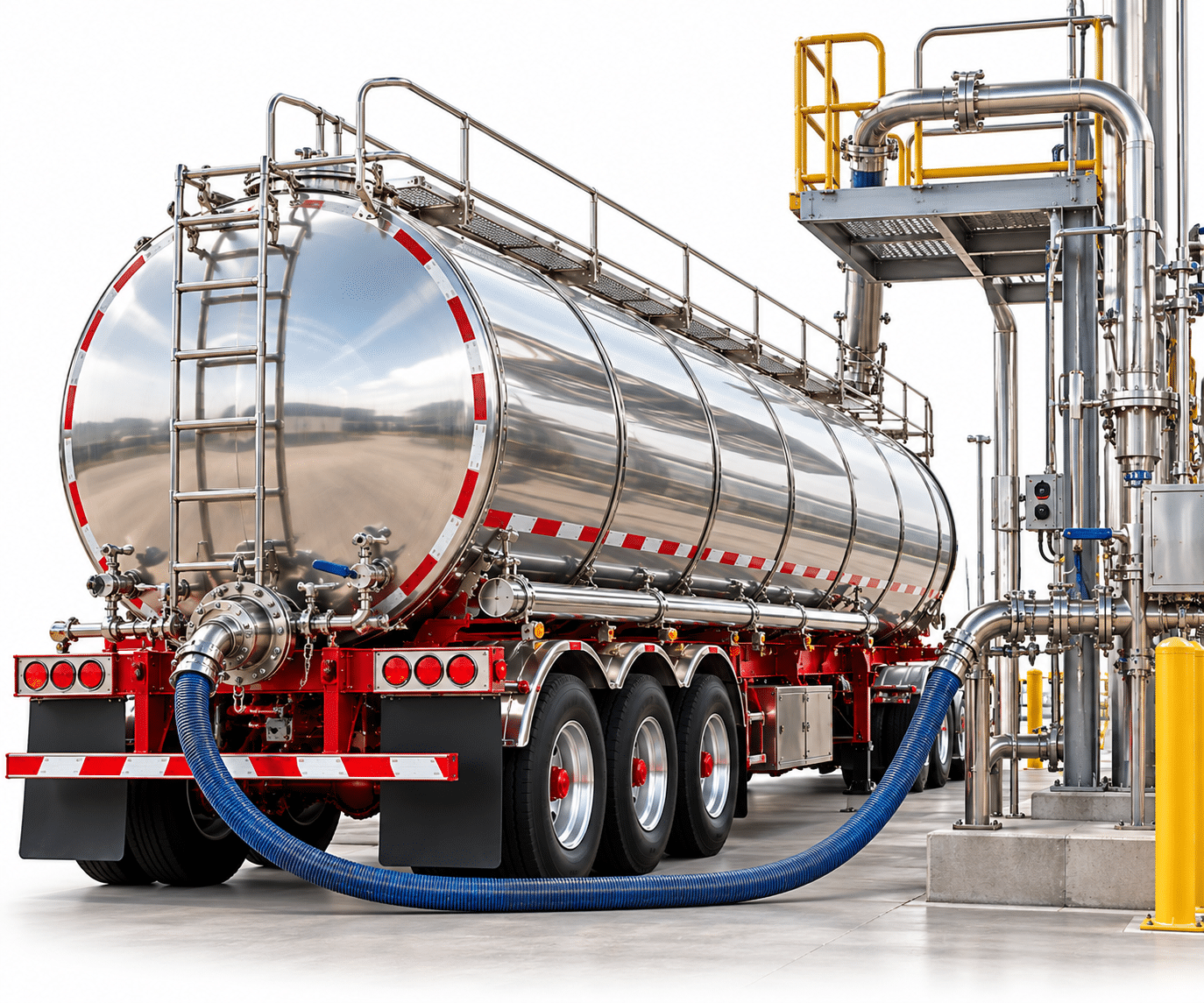
Liquid Bulk Tankers are available in many configurations because the required equipment depends heavily on the product being transported.
Common configurations may include:
Food-grade examples currently available in North America include stainless steel trailers with capacities around 6,000–6,800 gallons, while other liquid tanker categories can differ substantially in volume and design.
The required configuration should be selected according to:
| Specification | Typical Example / Range |
|---|---|
| Tank Capacity | Approx. 6,000–6,800 gal on current food-grade examples |
| Tank Material | Stainless steel common for food-grade applications |
| Compartments | Single or multiple depending on tanker design |
| Axle Configuration | Tandem, tri-axle, or other configuration |
| Insulation | Available depending on commodity and equipment |
| Heating System | Available on certain configurations |
| Payload Capacity | Depends on liquid density, equipment tare weight, axle configuration, and regulations |
Current food-grade equipment examples include 6,000-gallon tri-axle milk tankers, 6,400-gallon juice tankers, and 6,800-gallon stainless steel food-grade trailers.
Note: Tank volume does not automatically equal allowable cargo payload. The actual quantity that can be loaded depends on product density, tanker tare weight, axle configuration, cargo distribution, and applicable road weight regulations.
| ✅ Best For | ❌ Not Ideal For |
|---|---|
| Bulk liquid products | Dry freight |
| Food-grade liquids | Palletized cargo |
| Edible oils | Oversized machinery |
| Beverage ingredients | Cargo requiring open-deck loading |
| Compatible industrial liquids | Products incompatible with tank material |
| Large-volume liquid shipments | Small quantities better suited to drums or totes |
| Products requiring dedicated liquid-handling equipment | Freight requiring conventional trailer access |
Liquid Bulk Tankers are best suited for shipments where the product can move efficiently and safely as an unpackaged bulk liquid.
The exact tank should be matched to the commodity rather than treating all liquid tanker equipment as interchangeable.
Liquid Bulk Tankers support different industries depending on the tank material, previous cargo history, sanitation requirements, and equipment configuration.
Food & Beverage
Agriculture
Manufacturing & Industrial
Specialized Liquid Cargo
LAC’s current operating procedures include liquid cargo movements involving coconut oil, including heating, transloading, and final delivery.
Before booking a Liquid Bulk Tanker, confirm:
Keep note of these critical factors when using tankers:
A Liquid Bulk Tanker is usually a good option when your shipment:
A different transportation method may be more appropriate when the liquid moves in smaller packaged quantities, must remain inside an ISO Tank container, or is incompatible with available road tanker equipment.
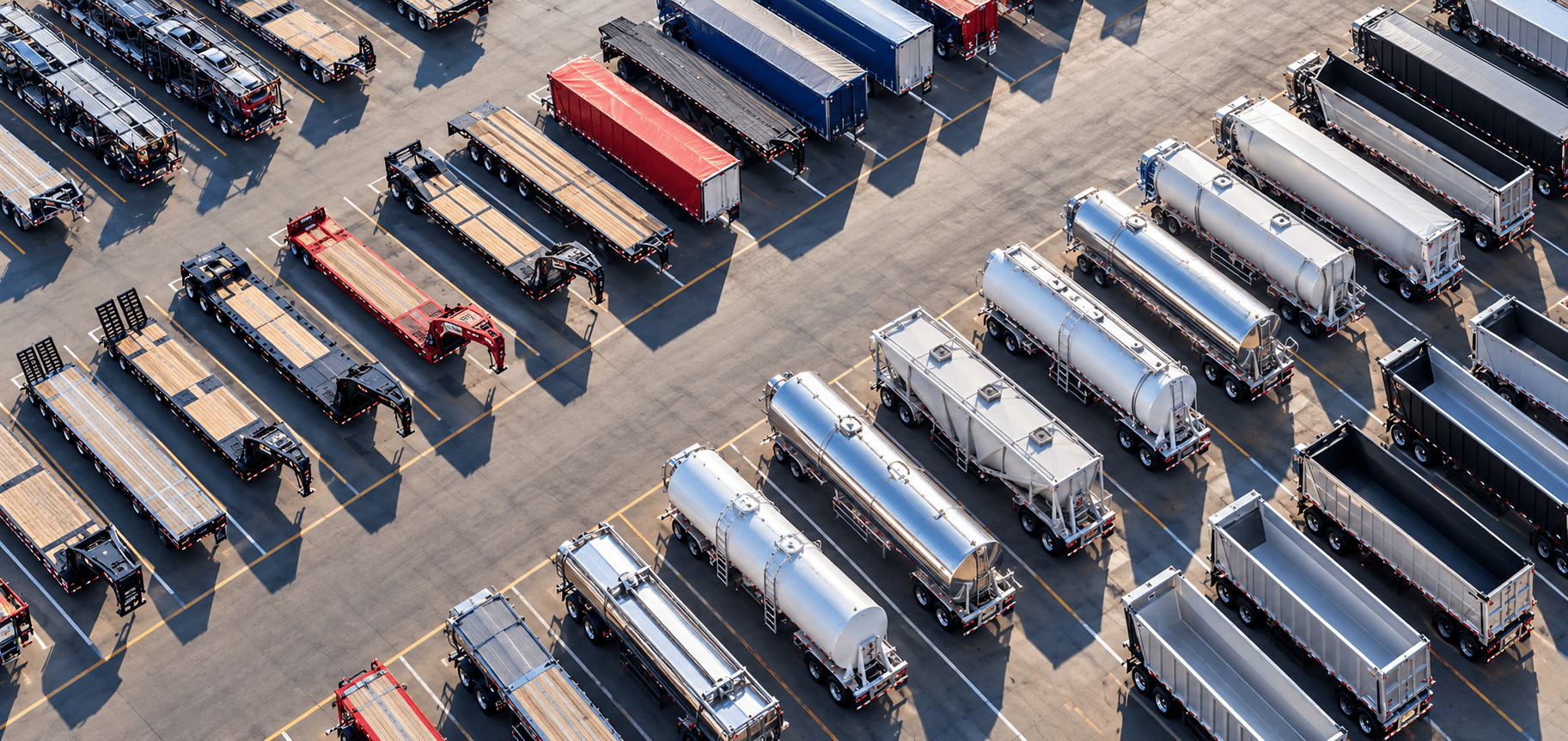
LAC coordinates Liquid Bulk Tanker and other Ground Freight solutions across North America based on your commodity, volume, equipment requirements, route, timing, and handling needs.
Learn from the experiences of those who matter most: our customers






 LAC Blog
 Export Guides
 Transport Guides
 Logistics Glossary
 Container Types Guide
 Trailers Types Guide
 Incoterms 2020 Rules